I reflected today there appears to be a renewed interest in improving mobility. From the wealth of information I receive from various fitness related e-subscriptions that land in my mailbox daily and the information I seek out in books and online everyone is feeling a little tighter and more restricted than they would like to be.
Perhaps mobility is a deceptive word - for some people it may generate images of older people and walking frames - but the concept is really about physically operating at your maximum potential. Our sedentary lifestyle certainly affects mobility, but as we're told to head to the gym to get more active, this opens up another problem. I see more and more gyms and fitness centres opening up and with a saturation of personal trainers it is also possible our "activeness" is negatively affecting our mobility.
Where I see mobility training offering great benefit is its potential to balance the physical disruption caused by either lack of activity or repetitive, restricted movement. There are a number of people doing great work in this space, but I believe Joseph Pilates really was a pioneer in this realm. The physical body really benefits from balance (I know, so does everything else it seems) and a focus on enhanced, functional mobility is really about bringing the body to a place a equilibrium. At its simplest, we need to strengthen muscles that are weak, lengthen muscles that are tight and look at the movements the body performs holistically.
If we are allowed to move naturally, following the movement patterns are designed for, we wouldn't see so many of the issues that plague our modern society. This might be easily dismissed as new-age or earthy, but the concept is simple: the impact that technology, sitting, busy lifestyles has on our bodies cannot be ignored. Conversely, going to a gym and using machines that replicate only a limited range of our human body's movement potential isn't exactly going to improve things either.
So what is the answer? Thankfully I also believe our bodies are tremendously adaptable. At some point you will have been astounded watching someone perform an amazing physical feat, just as I was amazed watching a clip of 71 year old contortionist 'the amazing Christina' last week. I think we all need to explore our individually best movement, work on our strengths, but work even harder on our weaknesses - whatever they may be. Pilates has some amazing things to offer in this area - at some point during a session you are doing to struggle through an exercise that challenges your particular trouble spots, while you will also get great pleasure flying through a sequence that you're perfecting execution in. The key benefit is that Pilates is always striving for balance as the ultimate aim. If the pendulum swings too far in one direction there is a pathway back through focussed concentration.
If only we could use this concept of striving for balance as a map for life...unfortunately the pathways aren't always so clearly defined. I wish you all the best in your journey to balance.

Tuesday, 9 February 2016

Wednesday, 27 January 2016
The power of Pilates to ground and centre


It occurred to me that cueing the phrase centreing often supports a greater purpose with Pilates. In our day to day lives we are often very mentally distracted from our bodies. Our mind is racing through thousands of thoughts in a short period of time and we easily become disconnected from our physical selves. By focussing our thoughts on our inner corset, even for just a few minutes, a sense of connection flows through the whole self. This can ground us back in the present and allow an opportunity to fully devote ourselves to our practice.
The use of centreing as a description also supports Joseph Pilates philosophy describing our core as our "powerhouse," a source of controlled energy supporting all movement in the body. If we feel movement originating from the inside out we are purposefully reconnected with our physical self, giving us a sense of control over our bodies. This is grounding and can be very empowering. Grounding is not necessarily a static state - as we connect with our breath we become more grounded. Lengthening our muscles and enhancing our range of movement also supports further grounding. Focussing on the precision of each movement continues the grounding process.
Centreing and grounding through Pilates allows us to walk away from a session renewed - we have refreshed a source of energy and reestablished a natural connection to our physical self and a satisfying sense of acccomplisment.
Wednesday, 6 January 2016
Why Pilates? Some observations of grattitude


Even after all the adventures were over, I was surprised to find myself integrating Pilates principles into unpacking our holiday, balancing uneven heavy loads.
 I would like to observe a wonderful gratitude for this amazing body, capably taking me through such pleasurable adventures. I warmly embrace the strength, grace, awareness and connection that Pilates has given me with my body.
I truly hope that Pilates bring you the same sense of satisfaction no matter what your activity of choice.
Until the next adventure.
Natasha
Tuesday, 8 December 2015
Clinical Pilates vs group classes
 There are many different varieties and disciplines of Pilates out there. Joseph Pilates never trademarked his system and his various proteges branched off and forged their own versions of "authentic" Pilates. As Pilates became more well known as an effective rehabilitation practice, we saw a divide emerge between "clinical" Pilates and everything else.
Fitness centres commonly run group Pilates mat classes to round out their schedules and offer something for everyone and classes suitable for "rest days". Pilates has sustained its popularity over the decades as a result of its effectiveness and real benefits.
So what is the difference? Will you get the same experience in a clinical session vs a group class?
 Clinical Pilates often takes place in specialised studios or physiotherapy clinics. Clinical Pilates utilises large equipment, most notably the reformer, but also the barrel, cadillac, chair, ladder and others. The equipment was devised by Joseph Pilates for his studio in New York, although Joseph was continually experimenting to develop new ways to help his clients. Clinical Pilates instructors must be specifically trained for this equipment and study for an extensive amount of time, often through a trainee-ship process.
 Benefits:
- Customised. Clinical Pilates sessions are often one-on-one or in small groups. The knowledgeable instructor can cater for your specific needs, especially if you have a condition or injury that requires significant modification.
- Clinical sessions are often expensive. They may also be difficult to schedule in for time-poor people due to the limited number of sessions available and the extended duration of sessions. These are important barriers to participation and so may exclude a large number of people from experiencing the benefits of Pilates.

Group Mat Pilates classes use the principles developed by Joseph Pilates in a group setting. They are often general in nature and might be held at your local gym or community venue. Most of the work is done on the floor and sometimes light equipment is used such as chi balls, fitness circles or resistance bands.
Benefits:
- Group mat classes are accessible, low cost and generally safe for most people. They offer enormous benefits through encouraging regular participation and are an excellent way to support your posture, core strength and mobility. A good instructor can offer modifications to accommodate some injuries, pregnancy or medical conditions.
- If you have specific rehabilitation requirements or a specific injury a group class may not always be appropriate. This can be determined through the screening process at registration or by consulting with the instructor and your medical practitioner. A few people also find they need more intensive coaching when starting Pilates to ensure they grasp the concepts effectively.
A compromise

We are seeing more and more boutique studios offering a balance between group mat work and clinical sessions. These studios might offer small groups (up to six) session for reformer or matwork bringing the cost down while still providing individual attention. These studios are proving very popular with people looking for an experience that matches their particular goals while not breaking their budget or time constraints.
The most important thing you should consider when choosing a Pilates class is your relationship with your instructor. Do they motivate you? Can you ask questions? Do they have appropriate experience and qualifications? Is the class schedule realistic to your current commitments - you really need to show up to class to reap the benefits.
If you have any questions about choosing a Pilates session for your particular needs, or about how to get the most out of your Pilates practice please feel free to drop me a line: info@practicalpilates.com.au
Until next time,
Natasha
Wednesday, 2 December 2015
"But why?" - tight shoulders

This week has been all about tight shoulders. It seems everyone is walking into class with their shoulders up to their ears and locked up with tension. I thought I could mention some of the physical reasons for tense shoulders, and touch on other issues that may also be manifesting in your posture.
The most common reason for tight and rounded shoulders is poor posture. Throughout our daily activities we use our arms in front of our bodies and as we tire our shoulders begin to round forward. The muscles across the chest and the front of the shoulder tighten and our upper back muscles become tight and weak. While Pilates can help to open our chest and strengthen muscles across our back, it is really important to stay tuned into our posture throughout the day. When we are really exhausted our posture suffers.
Ineffective breathing patterns contribute greatly to shoulder tightness. As our breath becomes more shallow, the muscles at the top of the shoulders work harder to facilitate our oxygen needs and this can over-elevate the shoulders. Full, rich and deep breaths allow these muscles to rest and lengthen.
Alignment issues throughout the lower body, from the feet through the pelvis and into the ribcage, all affect our shoulder alignment. Small adjustments can make a large difference to the load on the shoulders. In addition to alignment patterns created over time, we are often genetically predisposed to muscle imbalances which may put us at a higher risk of shoulder tightness.
With so many factors working against us, what can we do about our tight shoulders?
Stretch throughout the day. Regular chest and shoulder opening stretches are extremely beneficial.
Work on strengthening your upper back postural muscles. Pilates is excellent for this and don't skip correct execution of these exercises
Control your breathing. When you are doing your stretches above remember to breathe fully and deeply. If you find yourself getting anxious, bring your focus to your breath and visualise your shoulders gently soften.
In addition to the physical elements contributing to shoulder tightness there are some common emotional patterns that enhance repeated strain and elevation of the shoulders. When we are lacking in confidence our posture retreats to a reserved and rounded alignment. Anxiety and feelings of overwhelm result in the "weight of the world on the shoulders" syndrome and you may need to firmly reassure yourself that "everything is going to be okay" to truly release this aspect of tension. High stress over long periods of time is a strong contributor to locked up shoulders. The stance of "constantly being on alert" involves rounded and tight shoulders. If stressful situations are inevitable, balance them out with periods of complete release and aim for regular intervals of awareness, even if only for a few seconds.
I will be incorporating a lot more shoulder work into my sessions over the busy holiday season and I hope you will benefit from increased awareness of this common and frustrating pattern.
Tuesday, 24 November 2015
How Pilates can keep you sane during the holiday period

Pilates can be a truly grounding and centreing practice that really brings us back in tune with our bodies. As we bring awareness to our breath, our posture and our inner core we feel a renewed connection with ourselves. This can translate into reduced overwhelm, better connections with others and a sense of calm at an otherwise disconnected time of year.
My best tips for using Pilates to survive the silly season are:
- Continue with your regular practice of Pilates as much as possible. Try to schedule it in and if you need to miss a practice session, make it up as soon as practical.
- Practice your Pilates breathing throughout the day - in the shower, while doing the washing up or even first thing in the morning (before your check your email). Use red lights as a reminder to engage your deep core muscles. Squeeze your glutes when you're brushing your teeth. Align your posture and roll your shoulders open when sitting in your car seat or office chair.
- Use breath as a mindfulness tool. If tempted by another luscious dessert or exotic holiday beverage, take a couple deep breaths and connect with whether you really want to indulge or are simply unconsciously reacting to an offer.
- Don't wait for the New Year to practice healthy habits. The time is now, the present, to gift yourself the joy of feeling truly connected to your body.
- Help yourself survive exhaustion by staying organised and planning ahead - calmly. Minimise last minute rushing to the shops by keep a few simple generic gifts and entertaining supplies on hand. Plan you meals and utilise leftovers for weekly lunches and simple dinners. Utilise the plethora of resources on the internet to help you have a grounded and relaxing time with family and friends. Ask for help when you need it - especially from your immediate family. Let go of time-consuming traditions that no longer serve you and create new ones that are relaxing and inclusive for your whole family.
I wish you and your family all the best for this upcoming season, whether you celebrate it or not. It is a wonderful time to connect with those important to you and reflect on the past year and the one to come.
Until next time
Natasha
Tuesday, 17 November 2015
"But why?" Wednesdays - the importance of breath

Breath is a fundamental principle of Pilates. Through breath we enhance each exercise, activating dep abdominal function, supporting lengthened muscle contraction and adding dynamic energy to movements.
 I have heard some Pilates instructors who don't cue breathing...at all...
Without breathing, linked to each movement, it isn't really Pilates.
On the flip side, new participants often get consumed worrying whether they're breathing correctly. They put so much emphasis on when to inhale and when to exhale they feel completely overwhelmed by their efforts to correctly execute the exercise.
Here are my general rules for breath:
1) Generally, we exhale with the effort. This is not always the case, but a good rule to revert to if you are one of those people who find yourself holding your breath.
2) Breathe as deeply as possible. If you have a large lung capacity, don't feel pressured into breathing more shallowly to keep time with the rest of the class. I find this particularly applies for men who can often breath much more deeply.
 3) Connect your exhale breath with your deep corset activation. Each exhale is an opportunity to reconnect with your pelvic floor, to engage your transverse abdominus and feel your waistline narrowing. This will give you stability and also a better abdominal workout.
4) Spend some time opening up the thoracic area of the spine, especially the space between the ribcage. We spend most of our day breathing shallowly - it might take some very conscious efforts and some good stretching to really open up the space to engage a good, deep lung breathing pattern.
5) Use breath to help you go a bit further with your range of movement. If you're still breathing in, try to reach that little bit further. If you're still exhaling, really release into that stretch. Tie movement and breath together and keep challenging yourself. Deeper, longer, flowing.
Above all, keep breathing. Don't hold your breath. If you find yourself holding your breath you are missing an opportunity to get the most out of your Pilates practice.
I hope this post has inspired you to pay attention to you breath as you practice.
Until next time...
Tuesday, 10 November 2015
Wednesday's "but why"? - the benefit of Pilates over other types of exercise

I believe you know best what activities work best for you to improve your health, manage your weight and leave you feeling good about yourself. Our modern world is full of distractions, stresses and chaos. Each one of us is looking for a personal state of peace and tranquillity to help us make sense of everything that is going on in our lives. When searching for inner balance we might first think of popular self improvement techniques like meditation, simplifying, affirmations, etc, but we rarely consider exercise as a viable tool to help us balance our lives
It depends what your goals are, but have you thought about what Pilates might offer for your mental and emotional well-being? This post is all about "why" we might choose Pilates over or before other types of activities.
Pilates, like other mind-body regimes integrates conscious control of the physical self. If you are doing Pilates correctly, you cannot be planning what you're making for dinner or something that happened last weekend. You are required to focus, be present "in the moment" and execute a physical movement with control, breath and inner core control.
Pilates can uplift the mind and soul through
- Increasing your sense of mastery, which can help if you don't feel in control of your life or mood
- Releasing muscle tension through stretching and mobilising
- Boosting feel-good endorphins.
- Helping you sleep better at night having expended energy
- Providing a distraction from your worries.
- Getting rid of built-up stress and frustration.
- Improving your health and body, which can help lift your mood
 Research has also found that Pilates might event make you smarter. A group of researchers from the University of Illinois at Urbana-Champaign reported in the Journal of Physical Activity & Health that people have significantly superior brain function after a mindful movement practice like Pilates or Yoga compared to aerobic exercise.
Pilates could even help you train your nervous system. Every time we move we use several specific areas of our brain, sending impulses through the spinal cord to muscle fibres.
When you learn to voluntary engage certain muscles (like deep core activation in Pilates) you fire a movement chain that might have been asleep for a long time. A healthy nervous system means better communication between your brain and other parts of your body as well as the release of stress-fighting and mood-boosting hormones.
Pilates is great for relieving stress tension in the body. In a stressful situation our body is ready to move at its peak performance, but in most modern-day scenarios we can’t run away when stuck in a traffic jam and can’t pick a fight with our boss.
Pilates relieves tension built up in the muscles through gentle stretching and gradual conditioning. Fascial release techniques that many Pilates instructors use today will help you loosen tight muscles that are not responsive to passive stretching. When you get stress out of your body, you also get it out of your mind.
A body free from nervous tension and fatigue is the ideal shelter provided by nature for housing a well balanced mind, fully capable of successfully meeting all the complex problems of modern living. - Joseph Pilates

Pilates helps you control your emotions. As you learn to control your breath you can feel empowered to use that conscious breathing into stressful times in your daily life.
If you enjoy Pilates you are improving your happiness which has a massive carry-over to other aspects of your life. Joseph Pilates believed that "physical fitness is the first requisite of happiness".
Through Pilates you may also become more confident, as you learn new skills while working with the unique limitations of your own body. You will learn to accept you may not have the longest hamstrings,allowing you to stretch your legs further than your peers, but you might find yourself appreciating your shoulder stability as you plough through a plank sequence. Posture has also been linked to confidence levels and you can give yourself a quick self-esteem boost just by sitting up straight.
I hope these thoughts have encouraged you to consider Pilates a valuable use of your time, investing in yourself and your well-being. I hope this also motivates you in class to give each movement your 100% effort, knowing you are reaping the benefits through body, mind and soul.
Until next time,
-Natasha
Tuesday, 3 November 2015
Wednesday's "But why?" post - Pilates thread the needle
 Twisting and rotating is one of the most common movements that can put your neck or back out. Our modern sedentary lifestyle doesn't require a large range of rotation as it once did. When we find ourselves having to twist a little further than normal it can lead to uncomfortable muscle strains.
The Pilates thread the needle exercise, performed in the all fours position, is a wonderful rotational stretch that I like to include in almost every Pilates session. Most people find it quite challenging as they consider their mobility restricted through a tight chest and immobile neck. With correct execution, including focus on breath, this exercise can do wonders to release tension and enhance range of movement.
There are lots of ways to "cheat" through this exercise, so pay attention to your form. Here are some tips:
- Balance your bodyweight equally over your hands and knees throughout the exercise.
- Engage your core and keep your hips over your knees.
- Follow your hand with your gaze and truly turn your head to complete a full twist of the spine.
- Try not to hold your breath at any point and make sure you exhale fully.
Here is my version of Pilates "thread the needle"
 |
| Prepare: Start in all fours position (hands and knees). If you have sensitive wrists you can use a fist position or slightly elevate the palms (I like to use the edge of the mat, slightly rolled up). Make sure you align your hands directly under your shoulders and your knees under your hips. Ensure your pelvis is neutral (natural curve through the lower back) and maintain a slight engagement of your pelvic floor/inner corset. |
 |
| Inhale as you reach one arm up to the ceiling (or beyond). Spiral the whole torso, but drill your knees into the floor to keep your pelvis from shifting over one knee. |
 |
| Exhale as you "thread" the same arm between the opposite arm and knee. |
 |
| Come right down to the floor, resting the back of the shoulder on the ground and reaching the arm through as far as possible. Rotate your head to look past your shoulder to the ceiling. The supporting arm is bent and the palm is pressing into the floor to add additional rotation. |
 |
| Inhale as you reach the same arm back up towards the ceiling. |
 |
| Exhale as you return to your all fours starting position. Don't use this as a rest, consider it an opportunity to reset your excellent posture: stable shoulders, neutral pelvic, lengthened neck and engaged deep corset muscles. |
Repeat with the other arm.
Do at least three full sets, trying to increase your range of movement with each set.
Tuesday, 27 October 2015
"But why?" on a Wednesday - The Spine Stretch

The element that makes the Pilates Spine Stretch an effective mobilisation exercise for the spine is the use of breath, focus and flow. It is not simply about bending forward and seeing how far you can go, it is about the journey and the observations along the way. The controlled exhalation gives time to find where you have opportunity to extend your range of movement. The inhalation enhances space between the ribs and further decompresses the vertebrae.
 When setting up for this exercise in the seated position, you can bend your knees enough to allow for a fully neutral pelvis. You may even need to sit on a cushion or rolled towel to life the buttocks off the floor.
 Make sure you perform this exercise slowly enough to concentrate on keeping your shoulders relaxed and find length along the vertebrae as you move into flexion and back to neutral.
I find the most important element of this exercise is to approach it totally relaxed. Other exercises require a little more dynamic energy, where as this is about letting go while keeping a steady connection with the inner corset.
Pilates Spine Stretch
1) Prepare seated with your legs straight in front of you and your arms reaching forward at shoulder height.
2) Inhale to prepare. Feel your whole spine lengthen towards the ceiling as you send your breath into the deeper half of the lungs. Use your abdominal corset to feel as though you're lengthening your torso.

3) As you exhale, start from the neck and slowly release the spine into a rounded position over the legs. Ensure the weight of the head leads the movement and you keep your belly button pulled into your spine.
4) Stay in the rounded stretch forward as you inhale. Push the inhaled breath up into the back of the lower ribcage to intensify the stretch across the back.
5) As you exhale maintain your abdominal connection and slowly begin rolling up to your starting postiion. Start the roll from the lower spine and return the head to neutral last.
6) Repeat all 5-10 times.
If you want suffer from tight hamstrings but want to work towards an amazing spine stretch, I highly recommend this video.
Tuesday, 20 October 2015
Wednesday's "why do we do..." rolling like a ball
I haven't done "rolling like a ball" with my clients in a while, but it really is one of my favourites.
It always manages to produce a few giggles as it brings you back to a natural movement of childhood.

This exercise is brilliant for spinal flexion and engages good core strength to hold the tucked position. You have to be really aware of the curve of your spine and also how to find your balance point. You can really enhance the energy of the exercise through dynamic, full breaths that feel like they're pulling your whole body into the movement.
How to "roll like a ball"
Start seated, with your spine long and your knees bent.
Gently rest your hands on the tops of your shins.

As you exhale, release your spine into a c-curve, tucking your tailbone between your legs. Balance on the back of your pelvis as you float your feet off the floor.
 Inhale as you rock back quickly, until just before the bottom of your shoulder blades touch the floor. Don't go back too far! As you perform the rock back your whole body should stay in the tucked position, including your head. Don't lead the rock back by extending the neck.
Exhale to rock back up to your starting balance point. Use your abdominal muscles to control your movement.
Repeat ten times.
There are several options for different arm and leg positions. The main focus point is the rounded, flexed spine and the engagement of your breath and deep corset muscles.
It always manages to produce a few giggles as it brings you back to a natural movement of childhood.
This exercise is brilliant for spinal flexion and engages good core strength to hold the tucked position. You have to be really aware of the curve of your spine and also how to find your balance point. You can really enhance the energy of the exercise through dynamic, full breaths that feel like they're pulling your whole body into the movement.
How to "roll like a ball"
Start seated, with your spine long and your knees bent.
Gently rest your hands on the tops of your shins.

As you exhale, release your spine into a c-curve, tucking your tailbone between your legs. Balance on the back of your pelvis as you float your feet off the floor.
 Inhale as you rock back quickly, until just before the bottom of your shoulder blades touch the floor. Don't go back too far! As you perform the rock back your whole body should stay in the tucked position, including your head. Don't lead the rock back by extending the neck.
Exhale to rock back up to your starting balance point. Use your abdominal muscles to control your movement.
Repeat ten times.
There are several options for different arm and leg positions. The main focus point is the rounded, flexed spine and the engagement of your breath and deep corset muscles.
Tuesday, 13 October 2015
"But why?" Wednesdays - the Dart

I've yet to meet a client who hasn't complained of tight shoulders and neck muscles , which is usually caused by poor posture. Many people suffer more than others, but the majority of people can benefit from a simple postural strengthening exercise called "the Dart".
This simple exercise, when practiced for just a few minutes a day can relieve shoulder, neck and lower back tension. This exercise will strengthen upper back muscles to improve posture and improve shoulder placement. The Dart exercise also helps to increase mobility in the thoracic spine and engage core stability through extension of the spine.
The Dart can be challenging to grasp at first. If you are already tight across your chest and front of shoulders as well as weak across your upper back, it will seem as though you are restricted from moving. As you practice, your improved thoracic extension strength will help you get more out of the exercise as well as improve your posture throughout your daily activities. This improved posture takes the load off the neck and shoulders and allows your head to sit on top of your spine and out of the forward carrying head position.
The dart should be performed with the deep abdominal muscles correctly supporting the lower back. If your legs are lifting off the floor when you are in the Dart position, your lower back muscles are likely "taking over" most of the load in extension. But scooping our belly button towards your spine and focusing on length, rather than lift, you can allow the upper back muscles to engage. This sometimes feels a little unnatural, considering our thoracic spine has a normal flexion (forward bend) curve. With practice, and as the chest and front of the shoulders open up, you will begin to find move movement and strength in the upper spine without over extending the lower back.
If you would like to radically improve your posture in just a few minutes a day, try practicing this exercise for ten repetitions daily. Try really opening up the front of the shoulders as you come into extension and to keep your corset/pelvic floor engaged. Remember to breath deeply, inhaling for at least three seconds (count to three), and exhaling for the same or longer. A good breathing pattern is:
- Inhale to prepare.
- Exhale as you extend through the spine allowing the forehead off the floor (just a few centimetres)
- Inhale and hold the position. This is a good opportunity to ensure your pelvic floor and corset are engaged. You an also try to open up the shoulders a little more.
- Exhale and release back down to the floor.
Tuesday, 6 October 2015
"But why?" Wednesdays - Hundreds
Pilates Hundreds
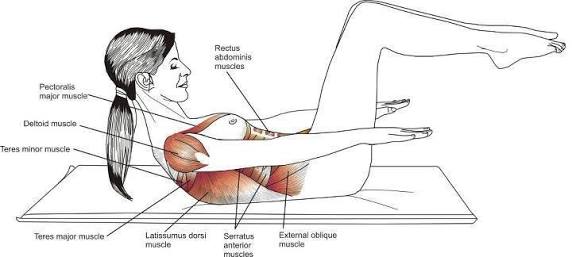
Why do we do them?
Is there a functional purpose other than an amazing ab "burn"?
Hundreds are one of the signature Pilates exercises. Everyone who has ever done Pilates has done some varation of Hundreds. If you google Pilates the images often show people doing Hundreds exercises, including Joseph Pilates himself.
Hundreds are popular because, when done correctly, they are an amazing abdominal toning exercise. The surface abdominal muscles are working hard to pull the body, against gravity, into flexion. The dynamic breathing and pulsing arm movements add a challenge to these core muscles. I've also seen Hundreds done very badly with poor neck alignment, rounded shoulders and a loaded lower back pulled out of neutral alignment.
The functional purpose behind the Hundreds exercise is core strength. If the deep corset muscles are active throughout the exercise thanks to fluid breath and deep concentration, a maximum core strength effect can be obtained. Maintaining good head placement, avoiding straining the neck and keeping a wide collarbone can also strengthen deep neck flexors and the postural muscles of the back.
Multiple variations on head placement, leg placement and breathing can ease strain or enhance intensity. You can also add an unstable surface or small props.
If you stay true to the Pilates principles and concetrate on your alignment and good corset activation the Hundreds are a powerhouse Pilates exercise full of benefits.
What is your favourite variation? Have you tried a dose of daily Hundreds?
Until next time...
-Natasha
Wednesday, 11 May 2011
Pilates and Pregnancy - Important Exercises
Pilates is commonly prescribed as a great exercise for pregnancy - the reasons for this include:
CLAMS:
Clams are an important glute and deep external rotator strengthener. It is important to keep these mucles toned during pregnancy to provide support to the pelvis and the sacro illiac joints, which often become looser as a result of higher levels of the hormone "relaxin" during pregnancy.
ABDOMINAL CENTREING:
Abdominal centreing is one of the basic principles of Pilates. During pregnancy, you should avoid lying on your back after your first trimester. The all fours position is a wonderful release for the lower back during pregnancy, and an excellent position to practice abdminal centreing.
PELVIC FLOOR EXERCISES:
I cannot emphasize enough the importance of exercising your pelvic floor muscles - remember this is the "two for one" muscle work out, as your transverse abdominus muscles are also contracted when you engage your pelvic floor. Important both pre and post natal.
SINGLE SIDE LEG LIFT
Again, an important exercise for strengthening the supportive muscles to the pelvis.
For a more individualised program, be sure to consult with your Pilates practitioner.
Until next time,
Natasha Debsieh
Practical Pilates
- low impact
- low intensity
- good core focus
- postural awareness
- mind body awareness and connection
- mobility and flexibility
- pelvic floor conditioning
- focus on breathing
CLAMS:
Clams are an important glute and deep external rotator strengthener. It is important to keep these mucles toned during pregnancy to provide support to the pelvis and the sacro illiac joints, which often become looser as a result of higher levels of the hormone "relaxin" during pregnancy.
ABDOMINAL CENTREING:
Abdominal centreing is one of the basic principles of Pilates. During pregnancy, you should avoid lying on your back after your first trimester. The all fours position is a wonderful release for the lower back during pregnancy, and an excellent position to practice abdminal centreing.
PELVIC FLOOR EXERCISES:
I cannot emphasize enough the importance of exercising your pelvic floor muscles - remember this is the "two for one" muscle work out, as your transverse abdominus muscles are also contracted when you engage your pelvic floor. Important both pre and post natal.
SINGLE SIDE LEG LIFT
Again, an important exercise for strengthening the supportive muscles to the pelvis.
For a more individualised program, be sure to consult with your Pilates practitioner.
Until next time,
Natasha Debsieh
Practical Pilates
Thursday, 28 April 2011
Back to the basics - the importance of Pilates fundamentals
At the beginning of each term, I like to spend a little extra time working on the basic fundamental principles of Pilates. This includes ensuring that each participant is effectively able to master the concepts of abdominal centreing, alignment, breathing and concentration. Sometimes, participants are eagre to jump into the more global muscle challenging exercises and the concept of drilling into the fine intricacies of the basic principles can be a little daunting. This, in itself, represents a need to enlist the ability to "concentrate" and really make the most of of the practice. Lets revisit a few ways that we can encourage ourselves to switch off from our daily distractions and really focus on the work presented in class.
Concentration:
Concentration in Pilates represents the ability to focus on the particular exercise, the muscles and bones involved, our breathing and the feeling of our body in space or against a surface. When we concentrate, we are applying our concious awareness to control movement. When we use the principle of concentration, we are able to correct faulty alignment and muscle use by examining how we are placed - statically and once we engage in movement. Once we have corrected our alignment, we can then create healthy movement patterns with correct muscle sequencing. The retraining of poor patterns is under our voluntary control, allowing us the ability to develop efficient movement patterns. I love to bombard my clients with a large amount of cues - encouraging different ways of promoting the same excellent technique. This, however, can be confusing for some people and can cause information overload. Participants are encouraged to use the information they feel most beneficial and switch off from any additional information that might be distracting their ability to concentrate. It is the responsibility of a good instructor to ensure the progression of information is delivered in an "easy to digest", sequential format - with exercises taught in layers - clearly and specifically described. The Pilates practitioner should also be able to communicate the purpose behind the principles and each exercise, to allow the participant further motivation to perfect their execution.
In a group class, this can sometimes be challenging, so please, communicate your specific needs to your instructor to ensure you are getting the most out of your session.
Breathing:
The breath in Pilates is consciously controlled to establish an efficient pattern, encouraging streamlined oxygen exchange and activating muscles in the abdominal wall. The conscious control of the breath is also an excellent concentration stimulate, the simple practice of being aware of our breathing allowing us to focus on our physical body in a way we can feel immediately. You want to feel yourself effectively directing the air to the lower part of the lungs and allowing the ribcage to expand sideways. Minimise fast, shallow breathing and tension in the upper shoulders and neck.
Alignment:
As we attempt to align ourselves, we must become more aware of our bodies. This acute awareness enlists a deeper level of concentration - the feedback felt from our sensory nerves giving us a platform to work from and towards. If we have access to a mirror, we can also access visual feedback on our alignment, giving us something tangible to work towards. In some positions and exercises, balance is greatly affected by our alignment and again provides another attribute to be aware of.
Abdominal Centreing:
Engaging and connecting with your abdominal centre allows you to become aware of your centre. When practiced and maintained in class, this awareness can be easily brought into the rest of your daily activities, creating a connection with your Pilates session away from the class setting. Many people feel completely disconnected from their abdominal area, which is why the simple process of reconnecting with your "corset" can provide an instant feeling of "wholeness" and again builds the principle of concentration.
In summary, using the fundamentals further builds the basic principle of concentration. Suddenly the basic principles don't seem to basic anymore and you are then able to get a great deal more out of each and every exercise, regardless of intensity. Allow yourself the opportunity to nurture your body as a whole, including your alignment, abdominal centre and breathing and explore the intense results of intense concentration.
-Natasha Debsieh
Cert IV Pilates Instructor
Practical Pilates
Pilates in St George region of Sydney's South and Wollongong
Concentration:
Concentration in Pilates represents the ability to focus on the particular exercise, the muscles and bones involved, our breathing and the feeling of our body in space or against a surface. When we concentrate, we are applying our concious awareness to control movement. When we use the principle of concentration, we are able to correct faulty alignment and muscle use by examining how we are placed - statically and once we engage in movement. Once we have corrected our alignment, we can then create healthy movement patterns with correct muscle sequencing. The retraining of poor patterns is under our voluntary control, allowing us the ability to develop efficient movement patterns. I love to bombard my clients with a large amount of cues - encouraging different ways of promoting the same excellent technique. This, however, can be confusing for some people and can cause information overload. Participants are encouraged to use the information they feel most beneficial and switch off from any additional information that might be distracting their ability to concentrate. It is the responsibility of a good instructor to ensure the progression of information is delivered in an "easy to digest", sequential format - with exercises taught in layers - clearly and specifically described. The Pilates practitioner should also be able to communicate the purpose behind the principles and each exercise, to allow the participant further motivation to perfect their execution.
In a group class, this can sometimes be challenging, so please, communicate your specific needs to your instructor to ensure you are getting the most out of your session.
Breathing:
The breath in Pilates is consciously controlled to establish an efficient pattern, encouraging streamlined oxygen exchange and activating muscles in the abdominal wall. The conscious control of the breath is also an excellent concentration stimulate, the simple practice of being aware of our breathing allowing us to focus on our physical body in a way we can feel immediately. You want to feel yourself effectively directing the air to the lower part of the lungs and allowing the ribcage to expand sideways. Minimise fast, shallow breathing and tension in the upper shoulders and neck.
Alignment:
As we attempt to align ourselves, we must become more aware of our bodies. This acute awareness enlists a deeper level of concentration - the feedback felt from our sensory nerves giving us a platform to work from and towards. If we have access to a mirror, we can also access visual feedback on our alignment, giving us something tangible to work towards. In some positions and exercises, balance is greatly affected by our alignment and again provides another attribute to be aware of.
Abdominal Centreing:
Engaging and connecting with your abdominal centre allows you to become aware of your centre. When practiced and maintained in class, this awareness can be easily brought into the rest of your daily activities, creating a connection with your Pilates session away from the class setting. Many people feel completely disconnected from their abdominal area, which is why the simple process of reconnecting with your "corset" can provide an instant feeling of "wholeness" and again builds the principle of concentration.
In summary, using the fundamentals further builds the basic principle of concentration. Suddenly the basic principles don't seem to basic anymore and you are then able to get a great deal more out of each and every exercise, regardless of intensity. Allow yourself the opportunity to nurture your body as a whole, including your alignment, abdominal centre and breathing and explore the intense results of intense concentration.
-Natasha Debsieh
Cert IV Pilates Instructor
Practical Pilates
Pilates in St George region of Sydney's South and Wollongong
Monday, 4 April 2011
Can't seem to fit your Pilates workout in? Common excuses and their remedies
As we travel farther away from the great intentions of the new year, some of us may be finding it harder and harder to stay motivated to continue with our exercise and particularly our practice of Pilates. Here in Australia, it's starting to cool down and with the recent time-change, its becoming much more inviting to curl up on the lounge with a good book, blanket and a warm bowl of food.
As Pilates instructors, we start to see some of the attendance taper off to regular classes and sessions, and although this can also often be a result of the winter "bugs" starting to rear their ugly heads, often it is a result of unfortunate excuses that prevent us from continuing our disciplined practice of Pilates.
Now before I delve in to some of these excuses, I want to explain that I am all in favour of taking it easy and taking care of yourself from time to time. I certainly believe that your body needs periods of rest and relaxation, where berating yourself for NOT exercising can be ineffective. So please, as you read this, keep in mind that my purpose is to keep you motivated, not guilty for allowing your body much needed rest.
Common Excuse #1 - I'm too busy to find the time to exercise.
When your life seems so busy and out of control, I beleive this is a key the time to add practice to your schedule. Exercise and the practice of Pilates allows you to take time out and put things in perspective during this busy time. Exercise will also rejuvenate you and allow you to be more productive. Schedule your practice into your diary, and plan around it - you'll be amazed.
Common Excuse #2 - I'm feeling so out of shape and everyone else is so fit.
This is particularly applicable when you normally participate in a group class. Sadly, we can often be so competitive with our peers, without even realising it. Often you might have a bad day, or are feeling out of shape because you missed your last practice or two, and it seems we find that a good excuse NOT to exercise. Consider teaming up with a buddy, or talking to your instructor about your specific "problem areas" to get you motivated to take a proactive approach to your health.
Common Excuse #3 - I'm not overweight so I don't really "need" to exercise.
This, of course, is a big myth. Exercise is important part of whole body health. Pilates, specifically, is very beneficial for posture and alignment, core strength and is an excellent mental trainer as well.
Common Excuse #4 - I'll just do it tomorrow.
This can be fine every now and then, to keep your life in balance, but the problem starts to go sour when tomorrow's practice doesn't happen. Especially if you're attending a planned session or class, its important to develop your sense of self commitment by following through with your plans. A habit takes a long time to build, but can be broken very quickly - place priority on your plans and make them into habits that happen automatically.
Common Excuse #5 - Boredom - I'm not "feeling" it anymore, or we just do the same old thing all the time.
Boredom is a huge issue - not just mentally, but physically as well. To create a physical response in the body, we need to keep mixing it up - challenging our muscles in new and diverse ways. Try something different - attack your practice with a different focus, eg: abs, posture, flexibility, breathing. Ask your instructor to give you some more challenging exercises. If you're in a group class - push yourself to do a few extra reps while the rest of the class is resting. Try a different class with a different teacher. Try a whole different activity all together! Variety is the spice of life. Just because something worked for you for a while, doesn't mean it will always keep working - keep it fresh.
Common Excuse #6 - It's too expensive, I'll just do it on my own.
The cost of a scheduled session or class is minimal compared to the other "indulgences" we partake in regularly - a cup of coffee, take away food, a movie, etc. The benefits of participation in regular exercise to our health are priceless. The advantage of having a scheduled session or class with a qualified instructor means we are getting a quality workout, applicable advice, and are being continually motivated to continue in a healthy direction. When you spend your hard earned cash on participating in a class or session, you are not only financially committing yourself to something, you are investing in a remedy to all of the excuses listed above. You should also try to get as much value as you can out of your investment - capitalise on the resources of your studio or instructor - ask them questions, enquire about available information, utilise any programs or information sources they may offer.
I truly hope, that you are feeling slightly more motivated to continue your practice of Pilates. Most of all, leave your past excuses in the past and abolish any unnecessary feeling of guilt that have prevented you from investing in your health.
Kind Regards,
Natasha Debsieh
Practical Pilates
Pilates classes and Private Sessions in Wollongong and the St. George region of Sydney South.
As Pilates instructors, we start to see some of the attendance taper off to regular classes and sessions, and although this can also often be a result of the winter "bugs" starting to rear their ugly heads, often it is a result of unfortunate excuses that prevent us from continuing our disciplined practice of Pilates.
Now before I delve in to some of these excuses, I want to explain that I am all in favour of taking it easy and taking care of yourself from time to time. I certainly believe that your body needs periods of rest and relaxation, where berating yourself for NOT exercising can be ineffective. So please, as you read this, keep in mind that my purpose is to keep you motivated, not guilty for allowing your body much needed rest.
Common Excuse #1 - I'm too busy to find the time to exercise.
When your life seems so busy and out of control, I beleive this is a key the time to add practice to your schedule. Exercise and the practice of Pilates allows you to take time out and put things in perspective during this busy time. Exercise will also rejuvenate you and allow you to be more productive. Schedule your practice into your diary, and plan around it - you'll be amazed.
Common Excuse #2 - I'm feeling so out of shape and everyone else is so fit.
This is particularly applicable when you normally participate in a group class. Sadly, we can often be so competitive with our peers, without even realising it. Often you might have a bad day, or are feeling out of shape because you missed your last practice or two, and it seems we find that a good excuse NOT to exercise. Consider teaming up with a buddy, or talking to your instructor about your specific "problem areas" to get you motivated to take a proactive approach to your health.
Common Excuse #3 - I'm not overweight so I don't really "need" to exercise.
This, of course, is a big myth. Exercise is important part of whole body health. Pilates, specifically, is very beneficial for posture and alignment, core strength and is an excellent mental trainer as well.
Common Excuse #4 - I'll just do it tomorrow.
This can be fine every now and then, to keep your life in balance, but the problem starts to go sour when tomorrow's practice doesn't happen. Especially if you're attending a planned session or class, its important to develop your sense of self commitment by following through with your plans. A habit takes a long time to build, but can be broken very quickly - place priority on your plans and make them into habits that happen automatically.
Common Excuse #5 - Boredom - I'm not "feeling" it anymore, or we just do the same old thing all the time.
Boredom is a huge issue - not just mentally, but physically as well. To create a physical response in the body, we need to keep mixing it up - challenging our muscles in new and diverse ways. Try something different - attack your practice with a different focus, eg: abs, posture, flexibility, breathing. Ask your instructor to give you some more challenging exercises. If you're in a group class - push yourself to do a few extra reps while the rest of the class is resting. Try a different class with a different teacher. Try a whole different activity all together! Variety is the spice of life. Just because something worked for you for a while, doesn't mean it will always keep working - keep it fresh.
Common Excuse #6 - It's too expensive, I'll just do it on my own.
The cost of a scheduled session or class is minimal compared to the other "indulgences" we partake in regularly - a cup of coffee, take away food, a movie, etc. The benefits of participation in regular exercise to our health are priceless. The advantage of having a scheduled session or class with a qualified instructor means we are getting a quality workout, applicable advice, and are being continually motivated to continue in a healthy direction. When you spend your hard earned cash on participating in a class or session, you are not only financially committing yourself to something, you are investing in a remedy to all of the excuses listed above. You should also try to get as much value as you can out of your investment - capitalise on the resources of your studio or instructor - ask them questions, enquire about available information, utilise any programs or information sources they may offer.
I truly hope, that you are feeling slightly more motivated to continue your practice of Pilates. Most of all, leave your past excuses in the past and abolish any unnecessary feeling of guilt that have prevented you from investing in your health.
Kind Regards,
Natasha Debsieh
Practical Pilates
Pilates classes and Private Sessions in Wollongong and the St. George region of Sydney South.
Monday, 28 March 2011
Will Pilates help me lose my belly fat?
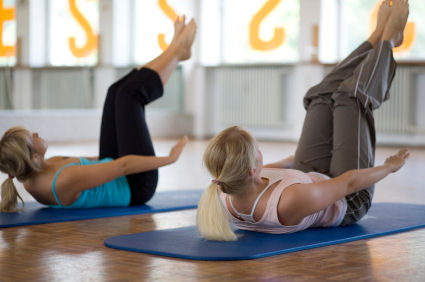 This is probably one of the most commonly asked questions a Pilates instructor gets asked. The technical answer to this question is "no", Pilates is not a cardio based form of exercise and therefore is not primarily designed to reduce body fat. The participant asking the question then feels confused, because the late-night infomercials claim that abdominal exercises help "spot reduce" and Pilates has a lot of abdominal exercise, right?
Lets examine this in a little more detail. The fatty deposits stored around your torso are energy stores - a result of excess intake of energy (calories) and a deficit of energy expenditure. To access these energy stores, you need to be expending energy, and classically we recommend aerobic energy expenditure as the biggest consumer of these fat deposits. However, these fat stores are also the main source of energy for our less "active" pursuits - our daily incidental exercise, the base metabolic functions of the body, even sleeping and watching TV! The problem, is that these activities simply do not use enough of the fat stores to be considered relevant fat loss pursuits.
So, what about Pilates? Well, Pilates does involve some movement - though not enough to get you huffing and puffing and really eating into those energy stores. Many Pilates routines are designed to flow, elevating the heartrate and therefore providing a higher energy expenditure over the whole session. Pilates also recruits the use of a wide variety of muscles, in different ways of contraction. Resistance training is now being highly recommended as an important aspect of fat loss. Resistance training helps fat loss by increasing lean muscle mass which increases energy expenditure. So, is Pilates considered resistance training? Pilates often uses isometric muscle contractions - where the muscle is held in a stationary state. Pilates also frequently uses eccentric muscle contractions - where the muscle fibres are lengthened. Some of the Pilates exercises require a high intensity of muscle contraction, that you would describe as a resistance exercise.
In my personal experience, Pilates does help with fat-loss. I have had several clients lose weight - including fat from their abdominals, thigh and buttocks - from the practice of Pilates. I, also, have personally experienced a change in physique from the practice of Pilates. Despite being very active, including resistance training and cardio activity in my training routine - my body shows it when I miss my Pilates sessions.
What about the variety that Pilates can offer? Keeping your body in shape is about "mixing" it up and changing your routine. Your body adapts very quickly to new stimulus - therefore your same old routine or walking, running or swimming may just not be cutting it anymore. Sometimes, Pilates can be just the shift that you need. The other benefits - posture, core strength, relaxation and focus - are icing on the cake.
And what about those killer abs? Well, Pilates can have amazing visual results on the body. The simple process of "narrowing" the waist, tones your abdominal centreing muscles and your clothes suddenly feel looser. The toned appearance of the waistline, back, buttocks and shoulders also look great in your swimmers. When you walk past your reflection in that shop window, you suddenly look slimmer - and you're standing taller. People make comments on how great you look - you're alive with vitality and the amazing thing is your back is not hurting as much as it used to.
So what is really important? Keeping up your practice of Pilates, keeping your functional fitness level high and if you happen to look great after all that work - well, that's even better.
Monday, 21 March 2011
Can I practice Pilates at home?
Pilates, just like any other exercise, requires time and effort to acheive great results. The fantastic thing about Pilates is, however, when you do find the time to practice you can be very efficient in reaching your goals. Just 20 minutes a day can make a profound difference in the way you move, feel and look.
So what do you do in those 20 minutes a day?
Well, if you have never done Pilates before, you will likely need to find a mentor. You may choose a book, DVD, pod-cast or even a you-tube clip - however to learn the exercises effectively, there is no replacement for personal instruction. A Pilates class can be a good start to learn the exercises and receive some feedback about your execution from your instructor. A private session will provide you with specific, hands on instruction and will also look at your big-picture situation - goals, postural assessment and even previous injuries. Once you start to feel comfortable with the Pilates exercises, choose a few that you feel comfortable in performing on your own and start to incorporate them into a regular practice routine.
Which exercises are best?
The exercises that are best for each body are very individual and depend on areas of weakness and tightness in your specific body. It is important to think about what exercises really resonate with you - and perhaps think about the exercises that you find particularly challenging. Most people do need to strengthen their core, so I believe it imperative to include simple abdominal centreing, including pelvic floor awareness, exercises. Due to compromised posture, most people also need to strengthen the thoracic area of the back, so exercises lying on your front are also really important for most of us. Click here to see a "Swan Dive" video by Michael King. Exercises that strengthen your gluteal (bottom) muscles are also important for most people to build pelvic stability. Click here to see a "Shoulder Bridge" exercise clip.
In Summary:
Personal practice is a very personal thing. Self awareness through the process of self examination is the first step - identify your weaknesses, identify your strengths (that may be resulting in tightness and imbalances), and include some general postural correcting exercises. You can accelerate your journey of self awareness by utilising the skills of a Pilates practitioner who will easily identify your specific issues and what exercises will be most beneficial for you. Importantly, your personal practice should not be painful. Stick to exercises that are basic to moderate in intensity and complexity, before progressing to more challenging routines. Remember the basic principles and use your personal time to integrate your concentration to create an oasis of relaxation through physical focus.
For those of you in the Sydney area, Practical Pilates will be holding a mini workshop regarding Pialtes practice at home on Monday the 4th of April, 2011 and Connells Point.
Good luck with your Pilates Practice!
So what do you do in those 20 minutes a day?
Well, if you have never done Pilates before, you will likely need to find a mentor. You may choose a book, DVD, pod-cast or even a you-tube clip - however to learn the exercises effectively, there is no replacement for personal instruction. A Pilates class can be a good start to learn the exercises and receive some feedback about your execution from your instructor. A private session will provide you with specific, hands on instruction and will also look at your big-picture situation - goals, postural assessment and even previous injuries. Once you start to feel comfortable with the Pilates exercises, choose a few that you feel comfortable in performing on your own and start to incorporate them into a regular practice routine.
Which exercises are best?
The exercises that are best for each body are very individual and depend on areas of weakness and tightness in your specific body. It is important to think about what exercises really resonate with you - and perhaps think about the exercises that you find particularly challenging. Most people do need to strengthen their core, so I believe it imperative to include simple abdominal centreing, including pelvic floor awareness, exercises. Due to compromised posture, most people also need to strengthen the thoracic area of the back, so exercises lying on your front are also really important for most of us. Click here to see a "Swan Dive" video by Michael King. Exercises that strengthen your gluteal (bottom) muscles are also important for most people to build pelvic stability. Click here to see a "Shoulder Bridge" exercise clip.
In Summary:
Personal practice is a very personal thing. Self awareness through the process of self examination is the first step - identify your weaknesses, identify your strengths (that may be resulting in tightness and imbalances), and include some general postural correcting exercises. You can accelerate your journey of self awareness by utilising the skills of a Pilates practitioner who will easily identify your specific issues and what exercises will be most beneficial for you. Importantly, your personal practice should not be painful. Stick to exercises that are basic to moderate in intensity and complexity, before progressing to more challenging routines. Remember the basic principles and use your personal time to integrate your concentration to create an oasis of relaxation through physical focus.
For those of you in the Sydney area, Practical Pilates will be holding a mini workshop regarding Pialtes practice at home on Monday the 4th of April, 2011 and Connells Point.
Good luck with your Pilates Practice!
Thursday, 17 March 2011
Pilates on the Ball - how does it differ from Mat Pilates?
Exercise stability balls are often used in conjunction with the practice of Pilates, as the unstable surface provides an excellent compliment to the principles of Pilates and variations to the Mat exercises. In addition to the challenge of instability, the stability ball can also enhance mobility and provide support, when used in specific ways.
The Pilates principles of concentration, alignment, breathing and centreing are used with the mobility and instability of the stability ball to provide an endless range of alternatives to the standard mat exercises. These exercise variations can stimulate awareness and controll, improve movement patterns and balance body and mind.
There are important safety considerations to observe when working with a stability ball - a mat should still be used to increase contact with the floor, and appropriate footwear or bare feet is essential. There should be plenty of room, around your ball, to move and you should be instructed how to get safely on and off your ball.
If you would like to take your mat Pilates practice to the next level, then consider trying a Pilates on the Ball class. Practical Pilates runs classes at Hurstville, on Tuesdays at 7:30pm.
Natasha
Practical Pilates
Pilates Classes and Private Sessions in Sydney's South and Wollongong
The Pilates principles of concentration, alignment, breathing and centreing are used with the mobility and instability of the stability ball to provide an endless range of alternatives to the standard mat exercises. These exercise variations can stimulate awareness and controll, improve movement patterns and balance body and mind.
There are important safety considerations to observe when working with a stability ball - a mat should still be used to increase contact with the floor, and appropriate footwear or bare feet is essential. There should be plenty of room, around your ball, to move and you should be instructed how to get safely on and off your ball.
If you would like to take your mat Pilates practice to the next level, then consider trying a Pilates on the Ball class. Practical Pilates runs classes at Hurstville, on Tuesdays at 7:30pm.
Natasha
Practical Pilates
Pilates Classes and Private Sessions in Sydney's South and Wollongong
Wednesday, 16 March 2011
Pilates Group Class or Private Session in Wollongong - what should I do?
The answer to this questions is ultimately based in your lifestyle and desired results. Group Classes are a great, inexpensive way to get an introduction to Pilates and learn the basic fundamentals and exercises. Group mat classes are structured like any other group fitness class, with an instructor demonstrating, describing and offering hands on corrections to a pre-planned class plan of Pilates exercises. A good instructor will also offer modifications and options to help participants cater the class to their specific needs or goals. Group classes, however, are designed for general populations without any medical conditions or injuries. Group classes also address an overall objective - core strengthening, alignment and posture - in a balanced manner, which may not address all of the specific needs of the participant. For many people Group Classes are a convenient, ideal way to gain many of the benefits of Pilates.
Private Sessions can offer specific, hands on, catered Pilates practice in a custom designed program. Private sessions will examine, in depth, your specific issues and will go through a program that will balance your individual body's needs. Private Sessions can also be great for a more detailed explanation of the principles and for an introduction to the Pilates exercises for the newcomer. Private Sessions are usually more expensive than group classes, but often the results are more profound, due to the specificity of the work done.
Both group and private sessions can be either studio based (using specific Pilates equipment) or mat based. Mat based Pilates can often be more appealing to the beginner, as there is no complicated equipment to use. Studio based Pilates is more specialised and can be more ideal for participants with special needs (eg: rehabilitation) or those with advanced goals. The important factor is to find a practitioner or instructor that you feel comfortable with, who is appropriately qualified for their field and offers a program that fits in with your lifestyle. The continuing practice of Pilates is your best way to keep your body fit - lean, toned, mobile, aligned and full of vitality.
Natasha Debsieh
Practical Pilates
Pilates Classes and Private Sessions in Wollongong and Sydney South
Private Sessions can offer specific, hands on, catered Pilates practice in a custom designed program. Private sessions will examine, in depth, your specific issues and will go through a program that will balance your individual body's needs. Private Sessions can also be great for a more detailed explanation of the principles and for an introduction to the Pilates exercises for the newcomer. Private Sessions are usually more expensive than group classes, but often the results are more profound, due to the specificity of the work done.
Both group and private sessions can be either studio based (using specific Pilates equipment) or mat based. Mat based Pilates can often be more appealing to the beginner, as there is no complicated equipment to use. Studio based Pilates is more specialised and can be more ideal for participants with special needs (eg: rehabilitation) or those with advanced goals. The important factor is to find a practitioner or instructor that you feel comfortable with, who is appropriately qualified for their field and offers a program that fits in with your lifestyle. The continuing practice of Pilates is your best way to keep your body fit - lean, toned, mobile, aligned and full of vitality.
Natasha Debsieh
Practical Pilates
Pilates Classes and Private Sessions in Wollongong and Sydney South
Subscribe to:
Posts (Atom)